Orange Slice vs Clay: Which is better for lead sourcing?
Feb 21, 2026

Orange Slice vs Clay: Which is better for lead sourcing?
Orange Slice and Clay both excel at lead sourcing, but Orange Slice wins for teams prioritizing high-intent signals from community discussions and rapid workflow creation through natural language, while Clay's 150+ data providers make it ideal for enterprise-scale bulk enrichment needs. The choice depends on whether you value predictable pricing and intent-driven prospecting (Orange Slice) or maximum data coverage with traditional firmographic signals (Clay).
Key Facts
• Data coverage: Clay aggregates 50+ data sources including LinkedIn, Crunchbase, and Clearbit, while Orange Slice offers 100+ built-in enrichments with custom scraping infrastructure
• Pricing models: Orange Slice uses predictable monthly credit refreshes starting at $20/month, whereas Clay's credit-based pricing can quickly become unpredictable with costs ranging from $16-$75 per 1,000 credits
• Workflow automation: Orange Slice enables natural-language workflow creation, while Clay requires building through visual interfaces with pre-defined connectors
• Intent signals: Orange Slice monitors Reddit, Hacker News, and community forums for high-intent prospects, while Clay focuses on traditional firmographic and technographic signals
• Integration approach: Clay offers native CRM connectors with some limitations requiring API workarounds, while Orange Slice uses direct API connectivity for broader extensibility
Modern GTM teams keep asking which platform wins the Orange Slice vs Clay debate for lead sourcing. This post settles it by defining what "great" looks like in 2026 while comparing both platforms on data depth, AI capabilities, pricing, and use-case fit.
Why compare Orange Slice and Clay for modern lead sourcing?
Best-in-class lead sourcing in 2026 means more than just pulling contact lists. "An AI lead enrichment tool automatically enhances raw lead data by gathering additional information from multiple sources using artificial intelligence and machine learning algorithms," according to Smartlead's analysis.
Clay is a data orchestration platform that lets sales and GTM teams pull data from multiple sources, enrich it with context, trigger workflows based on real-time signals, and push it directly into CRMs and outreach tools. It has become a go-to choice for teams needing maximum data coverage.
Orange Slice, backed by Y Combinator, takes a different approach. The platform scrapes websites, monitors LinkedIn, enriches your CRM, builds automated workflows, and researches competitors on autopilot. It is a GTM workflow builder and lead generation platform that lets teams create inbound and outbound go-to-market workflows using natural language.
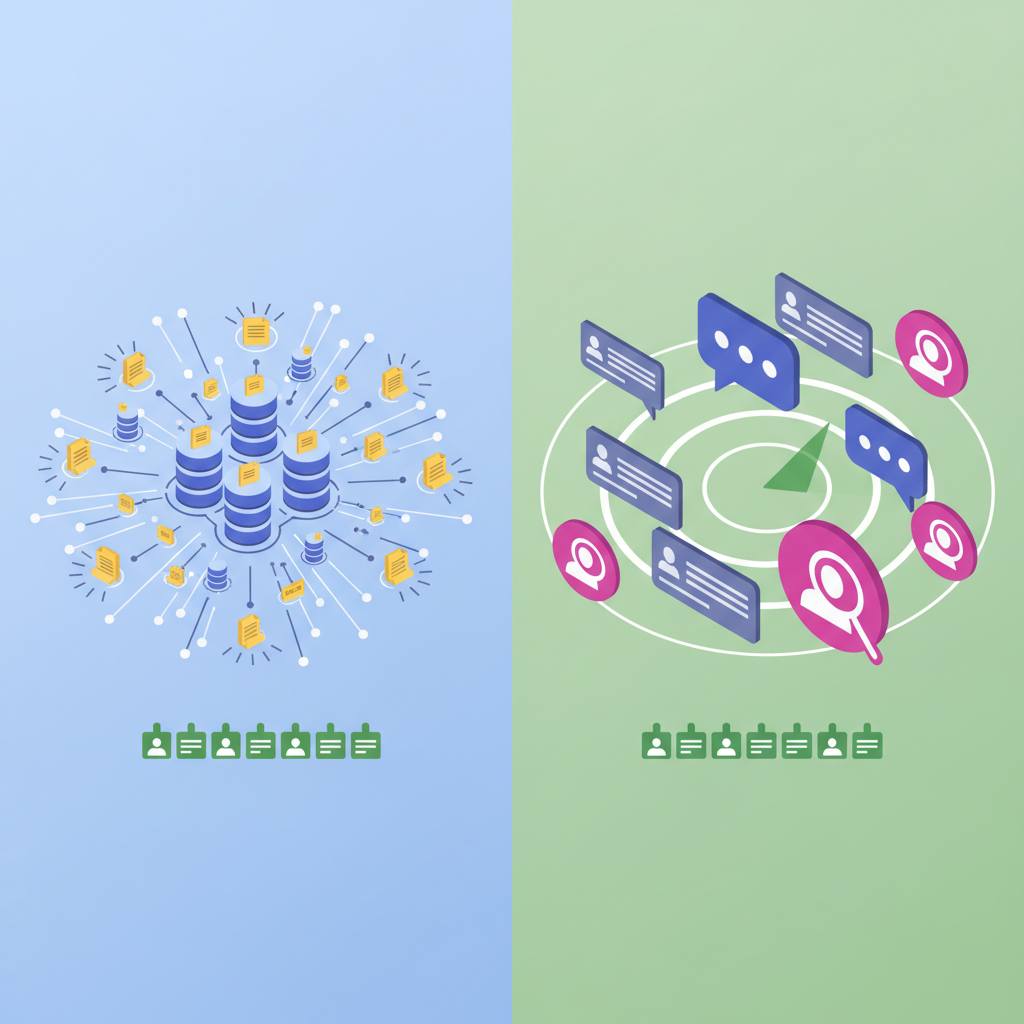
Both platforms solve the same core problem but with distinct philosophies. Clay emphasizes data breadth across 150+ sources. Orange Slice focuses on surfacing high-intent prospects through intelligent scanning of online conversations and community forums.
How much data can each platform enrich?
Data coverage determines how complete your lead profiles become.
Clay enriches contacts and companies in real time from 50+ data sources including LinkedIn, Crunchbase, and Clearbit. The platform gives users access to over 150 data providers through a single platform, covering every category GTM teams typically need.
Orange Slice's fully-typed SDK has 100+ enrichments built in, covering LinkedIn data, contact info, company data, web scraping, and AI research. The platform built custom scraping and crawling infrastructure that finds high-intent prospects by scanning online data sources such as company websites, news articles, job postings, and social media.
| Capability | Clay | Orange Slice |
|---|---|---|
| Data sources | 150+ providers | 100+ built-in enrichments |
| Real-time enrichment | Yes | Yes |
| LinkedIn data | Yes | Yes |
| Company firmographics | Yes | Yes |
| Intent signals | Funding, hiring, tech signals | Community forums, social discussions |
The key difference lies in signal types. Clay excels at traditional firmographic and technographic signals. Orange Slice surfaces intent from places competitors miss, like Reddit threads and Hacker News discussions where prospects actively seek solutions.
How do Orange Slice and Clay automate lead workflows with AI?
AI capabilities determine how much manual work your team eliminates.
Clay functions as a data processing workspace that centralizes company and people signals from many sources, lets users run AI research, enrich and segment lists, and orchestrate workflows without buying dozens of point tools. Claygent, Clay's AI research agent, has now surpassed one billion runs.
Orange Slice takes automation further with natural-language workflow creation. Users create AI-powered columns that analyze multiple data points to make predictions. The platform acts as an agentic interface on top of existing GTM tools, enabling faster workflow creation and deeper automation than traditional platforms offer.
Key automation differences:
-
Clay requires building workflows through a visual interface with pre-defined connectors
-
Orange Slice lets teams describe workflows in plain language, with AI handling the technical implementation
-
Both platforms support trigger-based campaigns built around behavioral cues like hiring, funding, or pricing page changes
For GTM agencies that need to build and iterate workflows extremely quickly, the natural-language approach removes technical barriers that slow down experimentation.
CRM & data-source integrations in 2026
How easily each platform fits into your existing GTM stack matters for adoption.
Clay integrates natively with Salesforce, HubSpot, Pipedrive, Apollo, and more, syncing enriched leads directly into playbooks. The Apollo and Clay integration enables users to find and enrich leads within Clay by leveraging Apollo's B2B database.
However, some integrations have limitations. "Clay doesn't have a native Apollo integration right now for this," notes the Clay community documentation regarding pushing data into Apollo sequences. Users must work through HTTP API columns or webhook workarounds for certain use cases.
Orange Slice acts as an agentic interface that controls multiple GTM tools through APIs. This approach offers more power and extensibility than traditional point-to-point integrations. The platform connects directly via APIs rather than relying solely on pre-built connectors, enabling custom workflows that traditional tools struggle to support.
Integration comparison:
-
Clay: Native connectors for major CRMs, some limitations requiring API workarounds
-
Orange Slice: Direct API connectivity for broader extensibility, natural-language workflow definitions

How predictable is Clay vs Orange Slice pricing?
Budget predictability affects how confidently you can scale campaigns.
Clay pricing structure
Clay uses credit-based pricing across five main tiers. "Clay's credit-based pricing can quickly become unpredictable," according to Leadle's analysis.
The real cost of Clay comes down to how fast you burn through those credits. Simple tasks are cheap, but advanced data enrichments or AI-powered actions can consume monthly allowances faster than expected. You get charged credits even when Clay cannot find the requested data.
Clay does offer flexibility features. If you do not use all your Clay credits in a given month, you can roll them over up to twice your current monthly plan allowance.
Credit top-ups are available at a 50% premium anytime during billing cycles.
Orange Slice pricing structure
Orange Slice offers simple, predictable pricing with credits that refresh monthly. Plans start at $20/month for the Starter tier with 10,000 credits, scaling to $200/month for power users with 150,000 credits.
| Plan | Monthly Cost | Credits |
|---|---|---|
| Starter Free | $0 | 5,000 one-time |
| Starter | $20 | 10,000/month |
| Growth | $40 | 25,000/month |
| Scale | $200 | 150,000/month |
| Enterprise | Custom | Custom packages |
All paid tiers include LinkedIn and company enrichment, verified email and phone lookup, AI-powered data extraction, and web scraping capabilities.
Key takeaway: Clay offers more data sources but with less predictable costs. Orange Slice provides straightforward pricing that makes budgeting easier for teams running consistent prospecting volumes.
When Orange Slice wins
"Efficiency, not growth at any cost, is becoming the new north star for GTM leaders," according to 3Sixty Insights' 2026 GTM agenda. Orange Slice aligns with this shift toward efficient, targeted outreach.
Orange Slice outperforms Clay in specific scenarios:
-
Speed-to-workflow matters most. Natural-language GTM workflow creation means teams describe what they want rather than building complex multi-step automations manually. GTM agencies iterating rapidly see immediate productivity gains.
-
Intent signals from community discussions. Orange Slice monitors Reddit threads, Hacker News, and community forums to surface people actively looking for alternatives, with their contact info attached. These high-intent prospects convert at higher rates than cold lists.
-
Predictable budgeting is critical. Teams tired of surprise overages appreciate monthly credit refresh cycles and transparent per-action costs.
-
Niche, complex GTM questions. The platform handles questions that traditional tools and AI search surfaces struggle to answer, like finding companies discussing specific pain points in industry forums.
-
Y Combinator backing. Orange Slice is now part of Y Combinator – building the future of B2B lead generation. This backing signals strong product direction and continued innovation.
As co-founders Kishan and Vihaar put it: "We find you customers who already want to buy." The focus on intent-driven prospecting, rather than spray-and-pray volume, resonates with teams optimizing for conversion rates over raw lead counts.
Key takeaways
Both platforms serve GTM teams well, but they excel in different contexts.
Choose Clay when:
- Maximum data source coverage matters most
- You have technical operators comfortable managing credit consumption
- Enterprise-scale bulk enrichment is the priority
Choose Orange Slice when:
- You need to build and iterate workflows quickly using natural language
- High-intent signals from community discussions drive your best conversions
- Predictable pricing with monthly credit refreshes fits your budgeting model
- You want an agentic interface that controls multiple GTM tools through direct API connectivity
Orange Slice monitors Reddit threads, Hacker News, and community forums to surface people actively looking for alternatives with their contact info attached. For GTM agencies prioritizing speed, intent accuracy, and workflow flexibility, this approach delivers faster time-to-value than traditional data orchestration platforms.
Explore Orange Slice's pricing to see which tier matches your prospecting volume.
Frequently Asked Questions
What are the main differences between Orange Slice and Clay for lead sourcing?
Orange Slice focuses on high-intent prospecting through intelligent scanning of online conversations, while Clay emphasizes data breadth from over 150 sources. Orange Slice offers natural-language workflow creation, whereas Clay uses a visual interface for building workflows.
How does Orange Slice's pricing compare to Clay's?
Orange Slice offers predictable pricing with monthly credit refreshes, starting at $20/month. Clay uses a credit-based system that can become unpredictable, with costs varying based on credit consumption and task complexity.
What are the AI capabilities of Orange Slice and Clay?
Orange Slice allows natural-language workflow creation, enabling faster and deeper automation. Clay centralizes data signals and lets users run AI research, but requires building workflows through a visual interface.
Which platform is better for handling niche GTM questions?
Orange Slice is designed to handle niche, complex GTM questions that other tools struggle with, thanks to its agentic interface and natural-language capabilities, making it ideal for teams needing quick workflow iteration.
How does Orange Slice integrate with existing GTM tools?
Orange Slice acts as an agentic interface that controls multiple GTM tools through APIs, offering more power and extensibility than traditional point-to-point integrations, allowing for custom workflows.
Sources
- https://www.leadlehq.com/post/top-clay-alternatives-in-2025-leadles-guide-to-sales-intelligence-tools
- https://www.oringroup.co.uk/clay
- https://www.smartlead.ai/blog/ai-lead-enrichment-tool
- https://orangeslice.ai/
- https://ziellab.com/post/why-clay-is-the-undisputed-champion-of-all-gtm-tools
- https://www.ycombinator.com/companies/orange-slice
- https://www.salesforge.ai/blog/clay-ai-gtm-workflows-2026
- https://university.clay.com/docs/apollo-io-integration-overview
- https://community.clay.com/x/support/qo17y8cppamk/integrating-clay-with-apollo-best-practices-and-po
- https://orangeslice.ai/pricing
- https://3sixtyinsights.com/wp-content/uploads/2025/11/3Sixty-Insights-Research-Agenda-2026-Go-to-Market-B2B-Web.pdf
- https://www.orangeslice.ai/blogs